Intention of this blog: To explain “The Why of The Way“
My first Camino was in September 2025, and my second, 2026. Friends ask, “Why do it again?” For some, it is a nice, long walk; for others, the journey holds deeper meaning. The motivation is personal; but by the time you reach Santiago, it affects you whether you want it to, or not.
So . . . What is it Like?
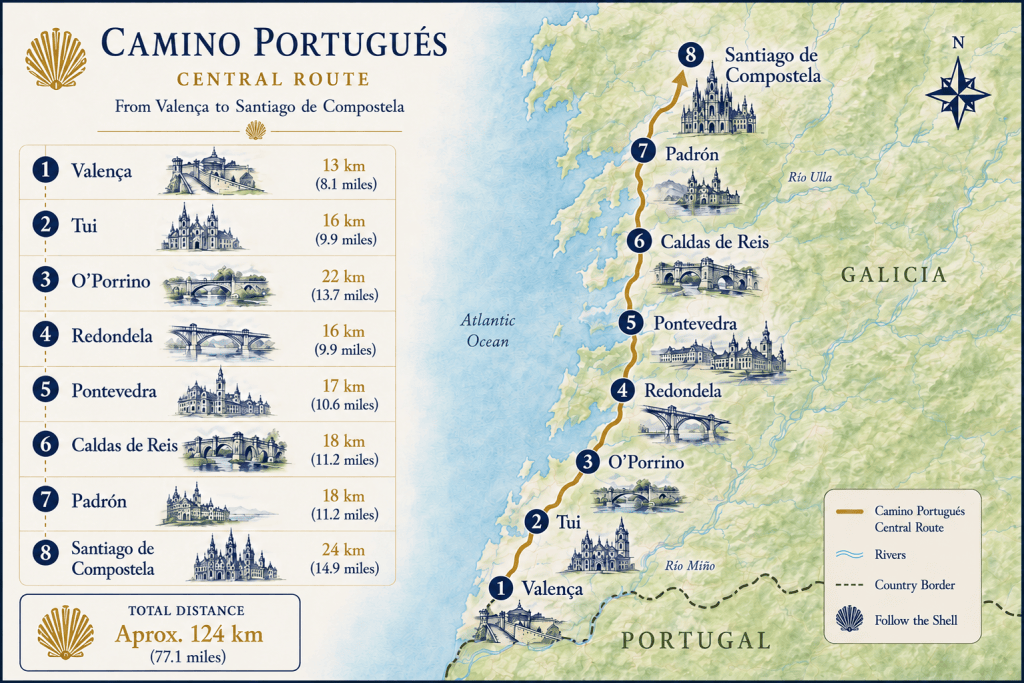
The Camino Portugués Central Route is an ancient walking route that winds through villages, fields, and woods. Some asphalt roads, stone paths, dirt trails, and cobblestones. Rain in Galicia is frequent, in September less likely.
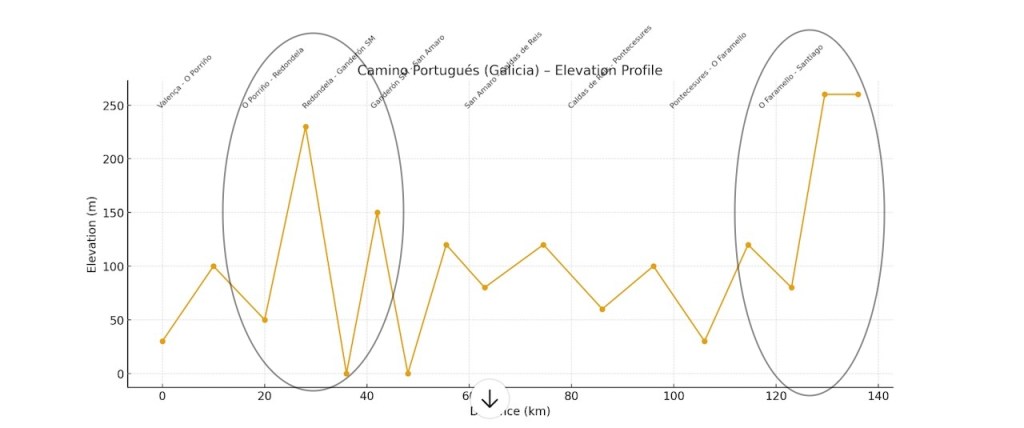
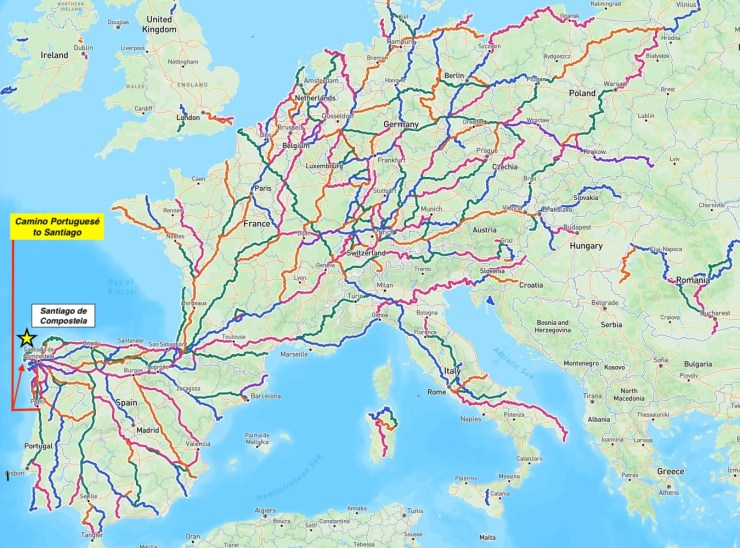
The route is Valença, Portugal, to Santiago de Compostela, Spain – 124 km (78 miles). I did NOT carry my possessions on my back. It is “Camino by car”, transporting daily to hotels. Why do this? For me it’s enjoying new things, leaving routine, habits and apathy behind.
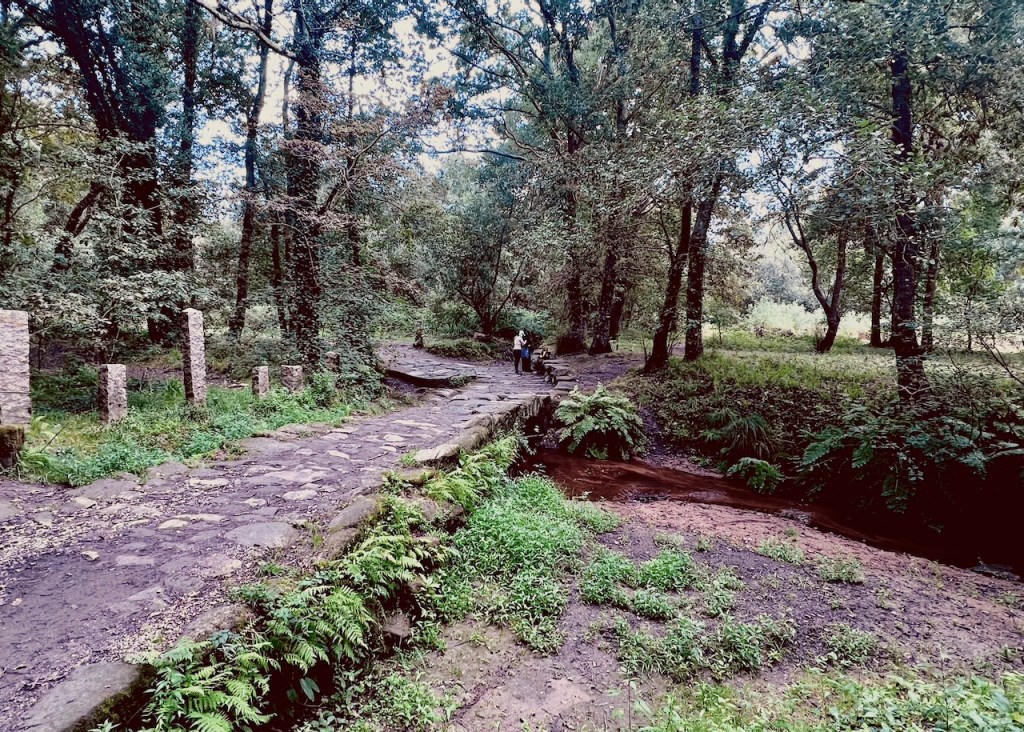
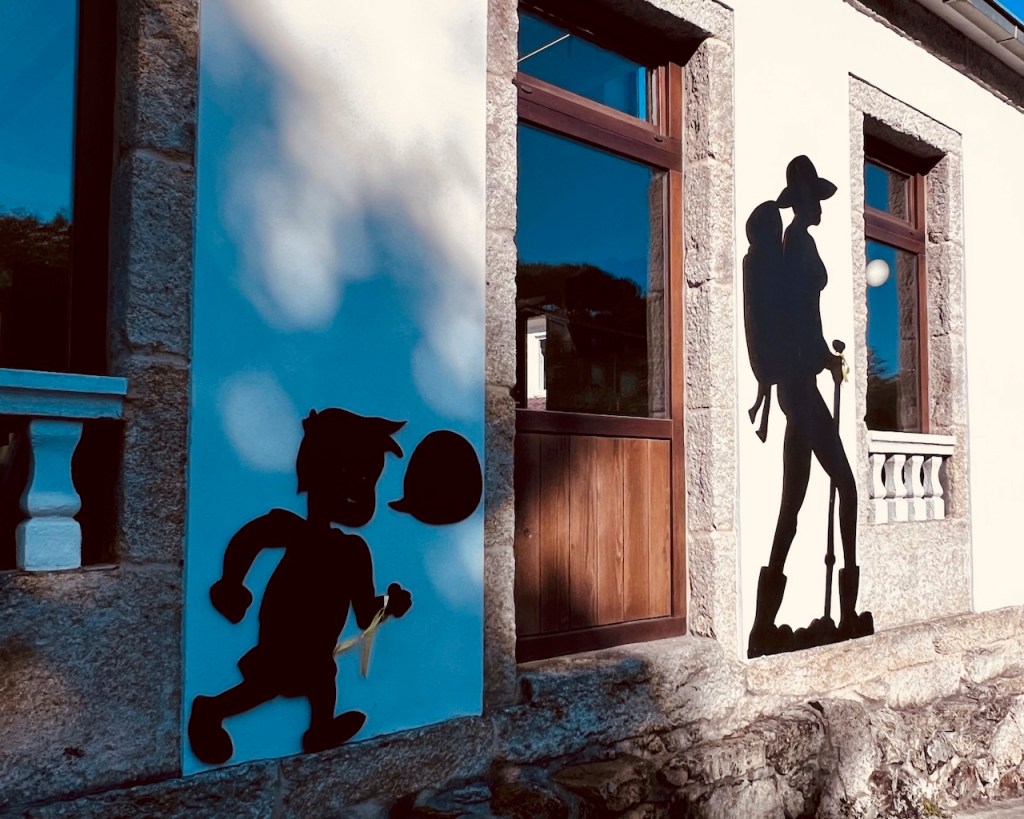
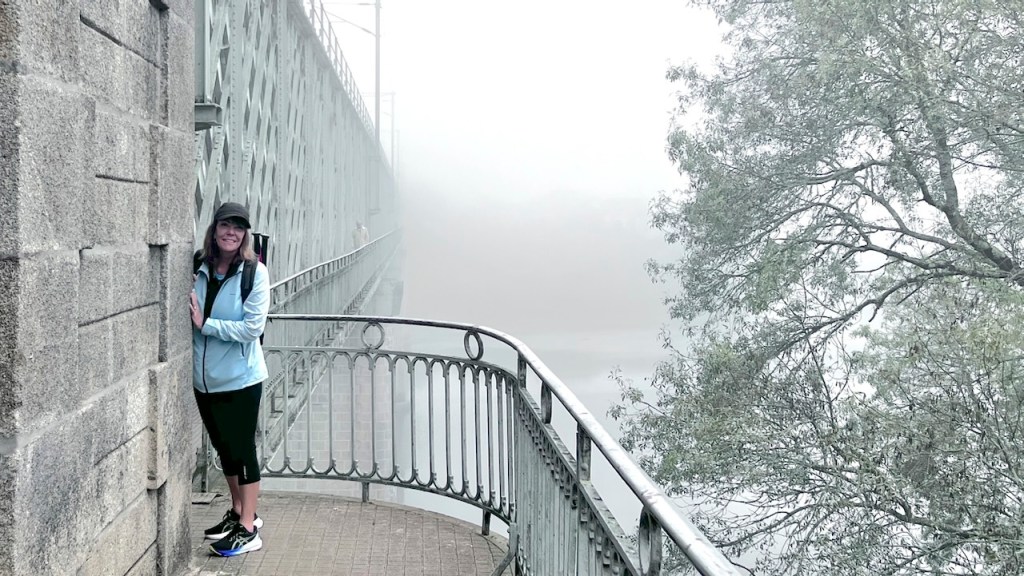
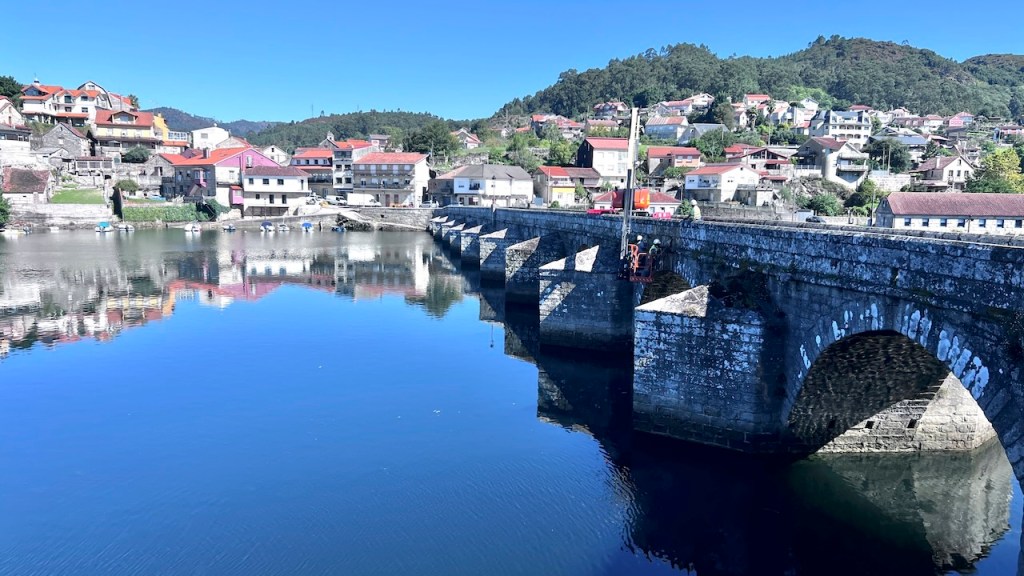
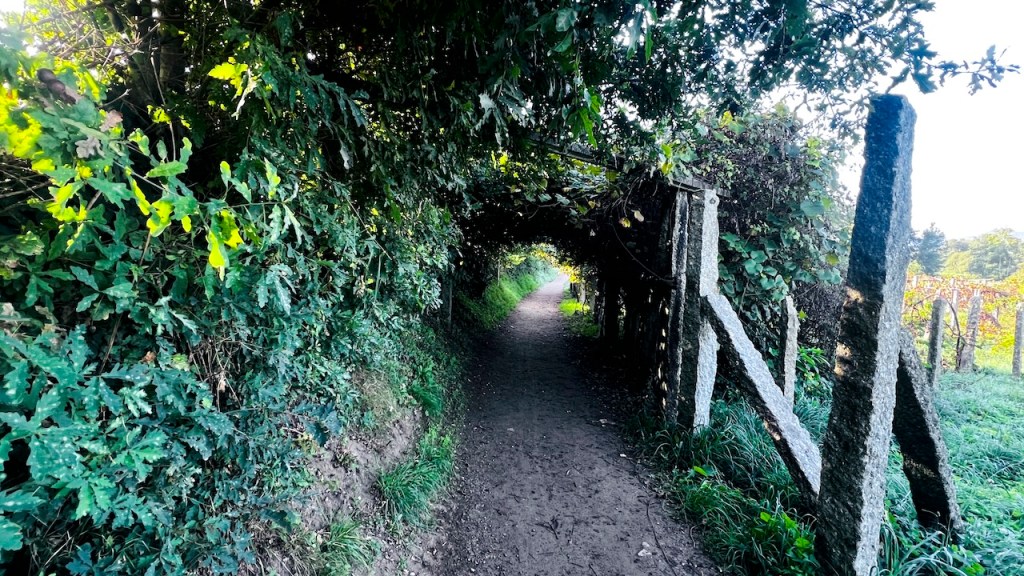
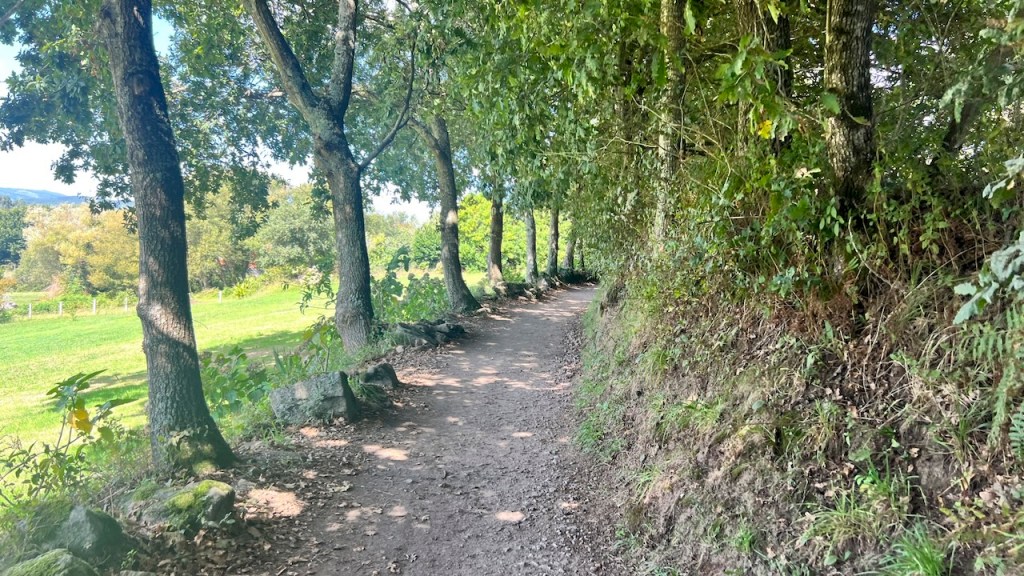
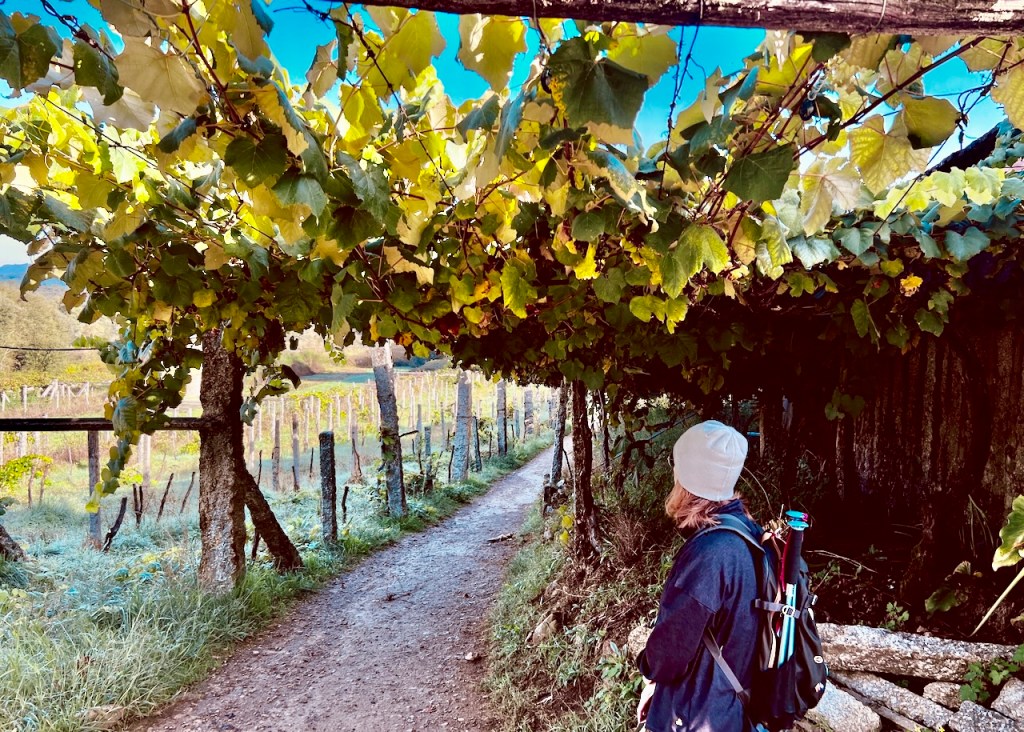
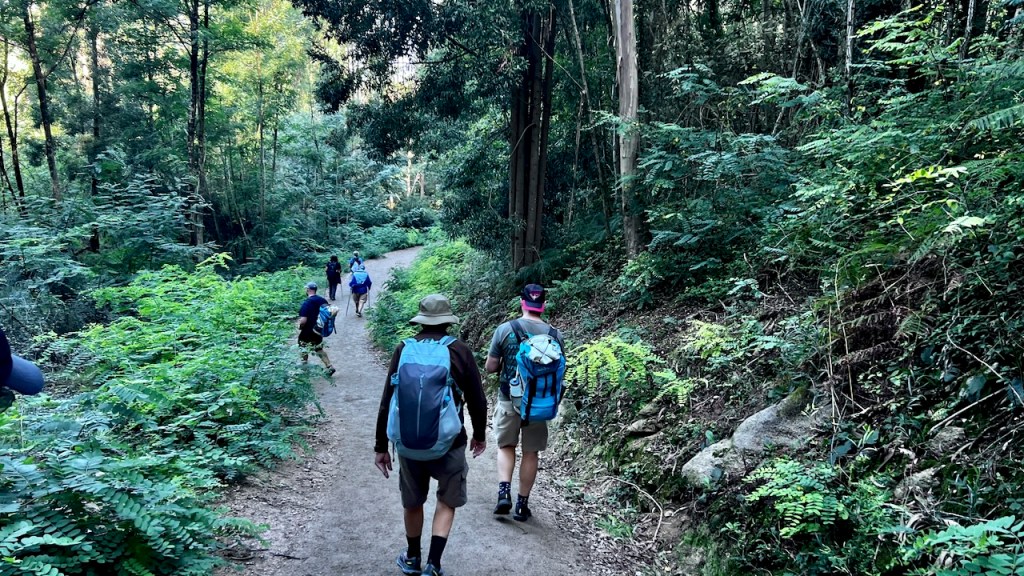
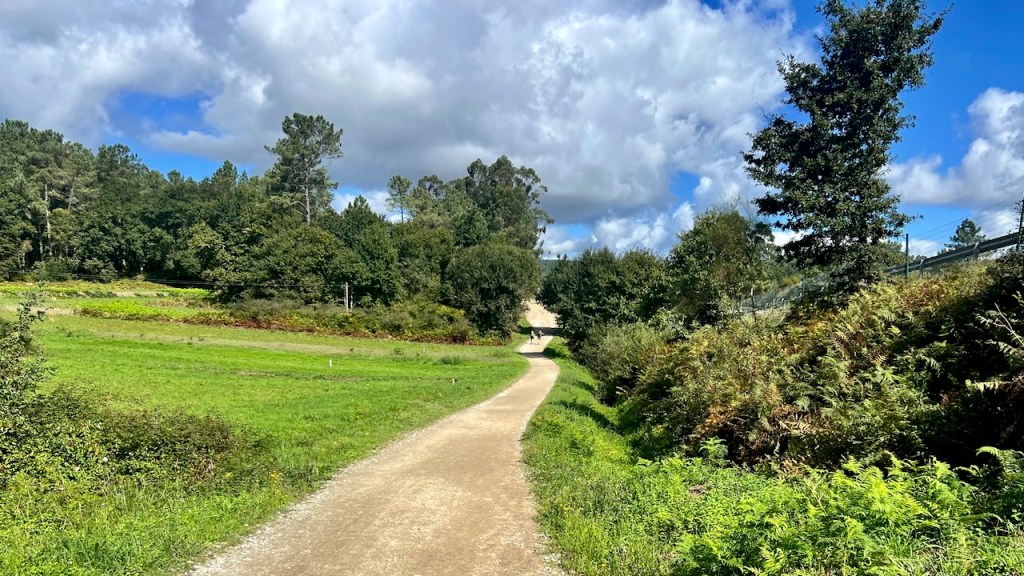
No mountain to cross; nonetheless, ascents and descents are steep.
How Do You Know Where to Go?
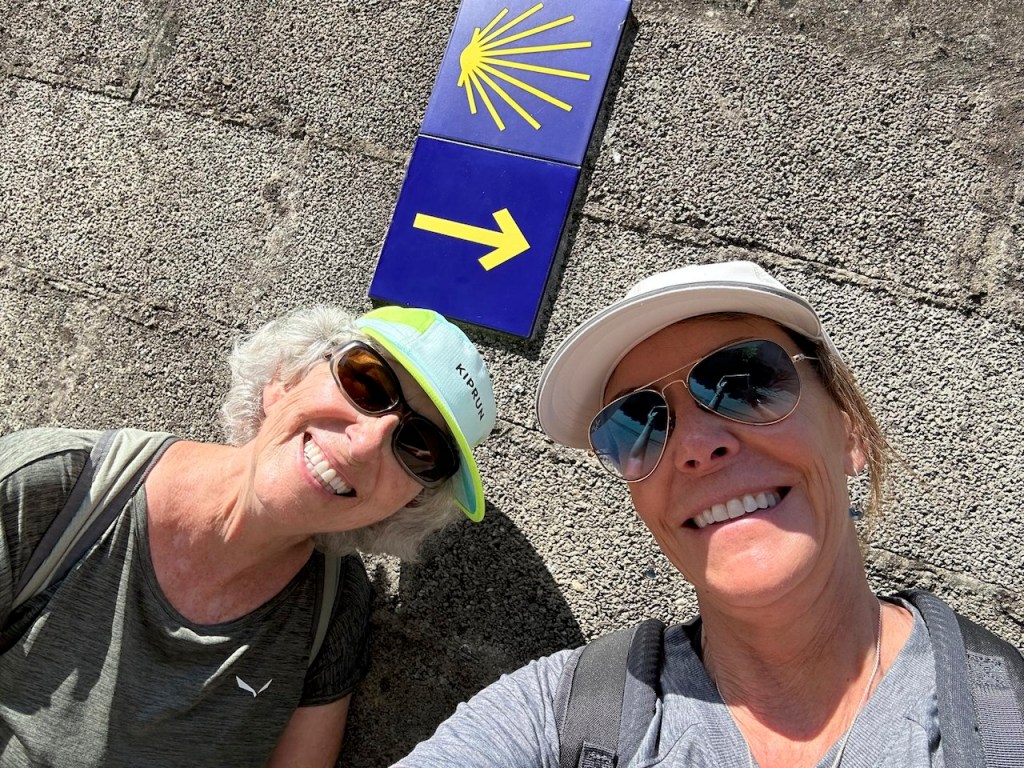
Follow the shell to Santiago. For centuries, the scallop shell has symbolized the pilgrimage to Santiago de Compostela. The shells and yellow arrows mark the path. A scallop shell dangling from your pack is evidence you are a pilgrim (peregrino), not a tourist.
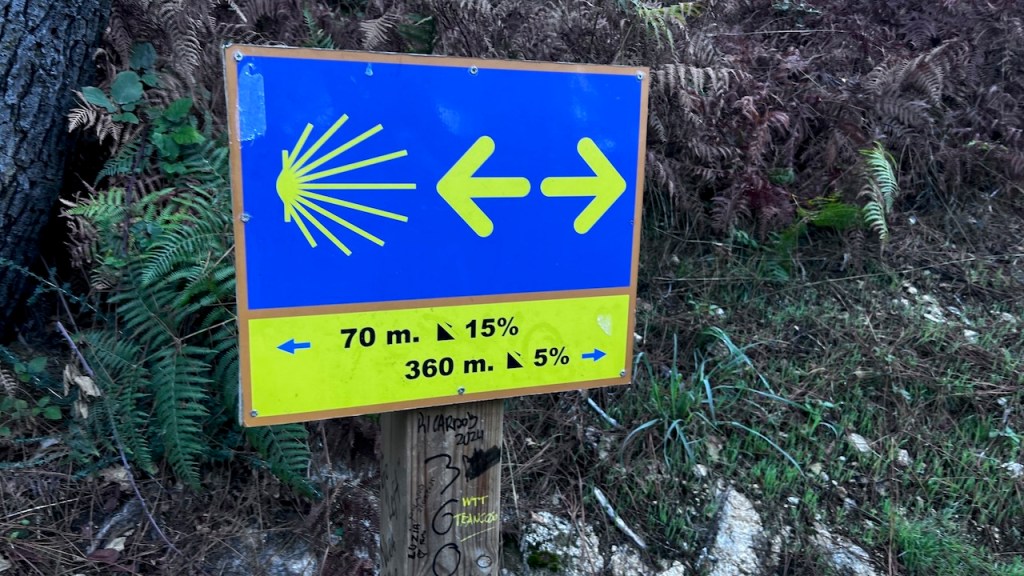
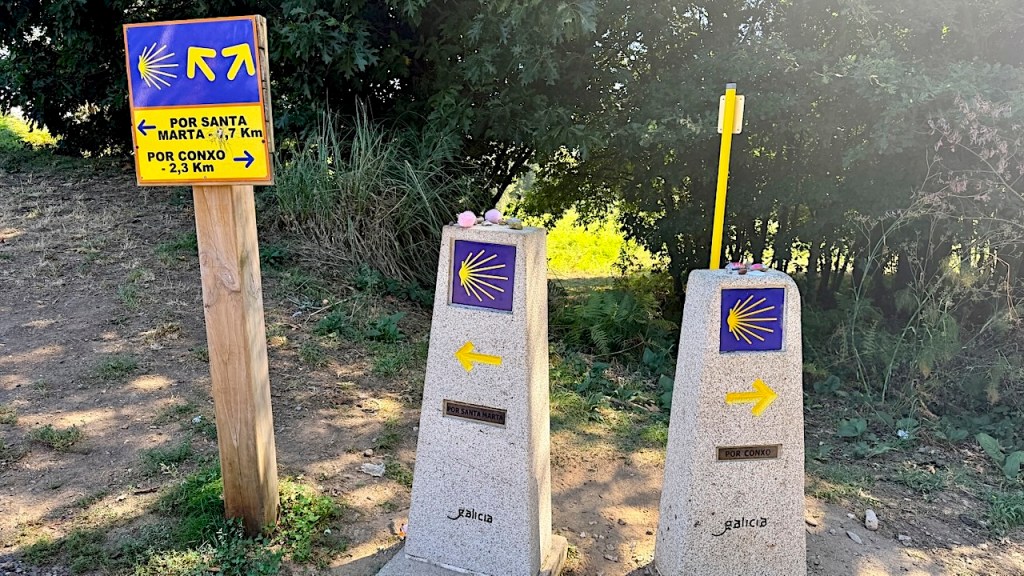
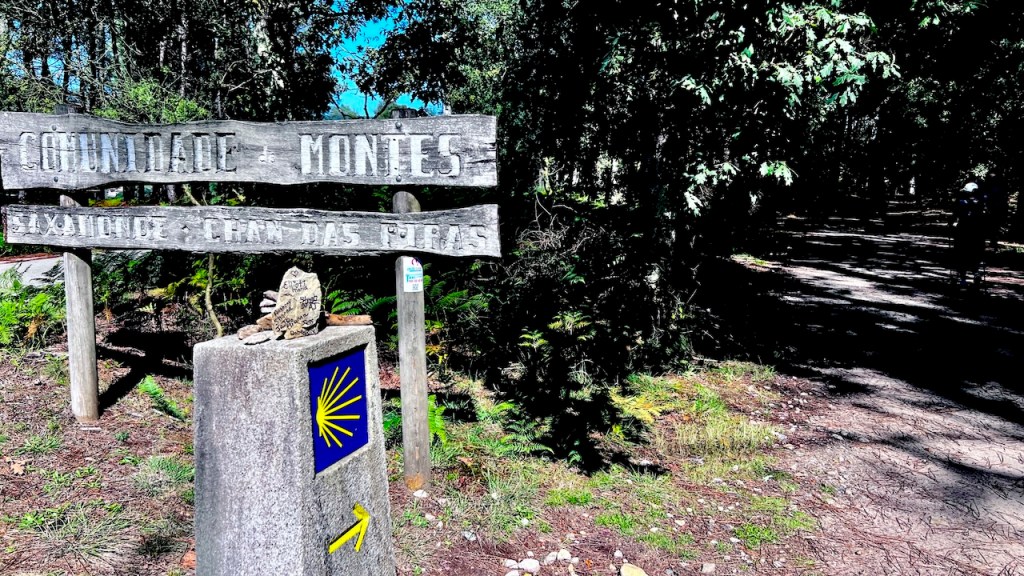
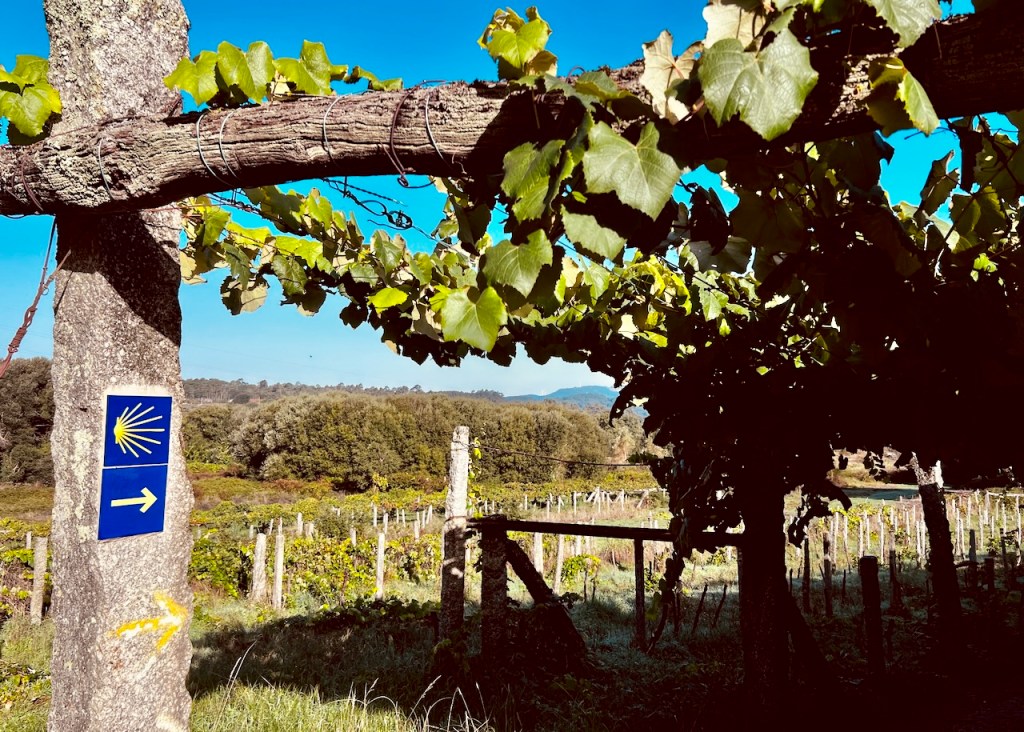
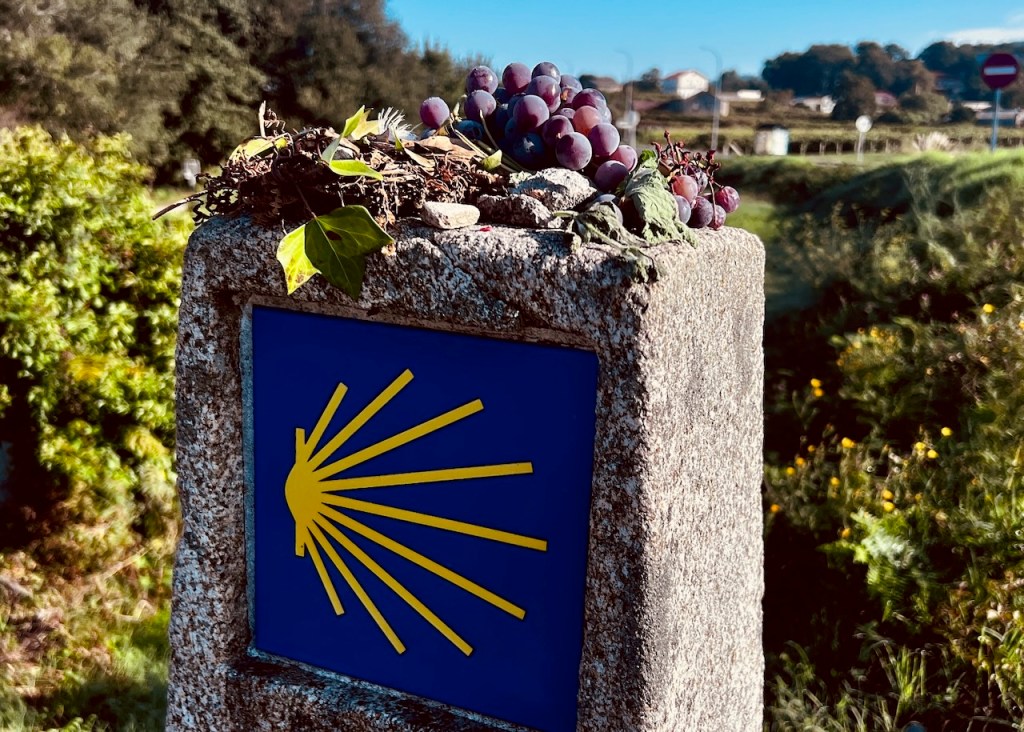
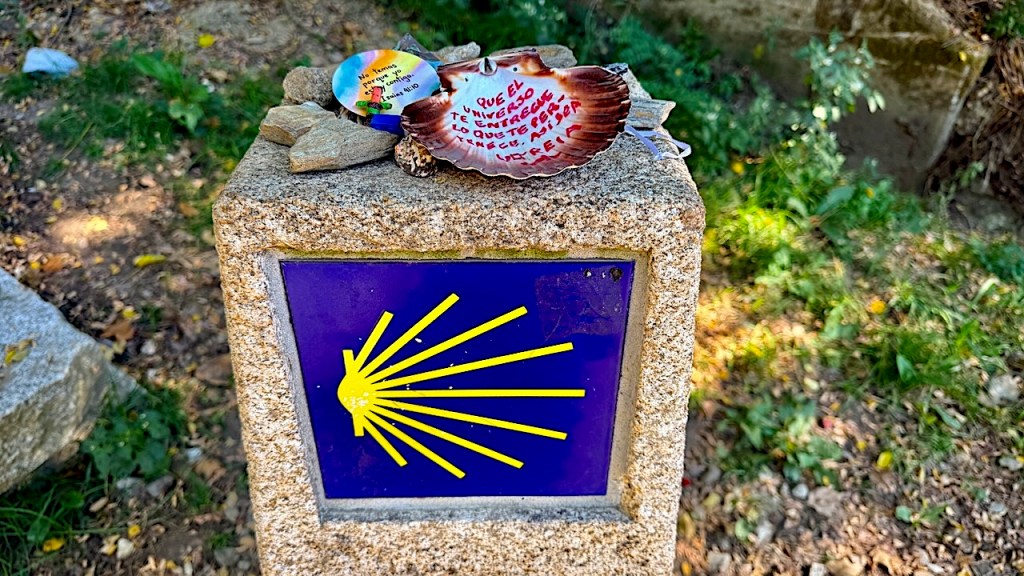
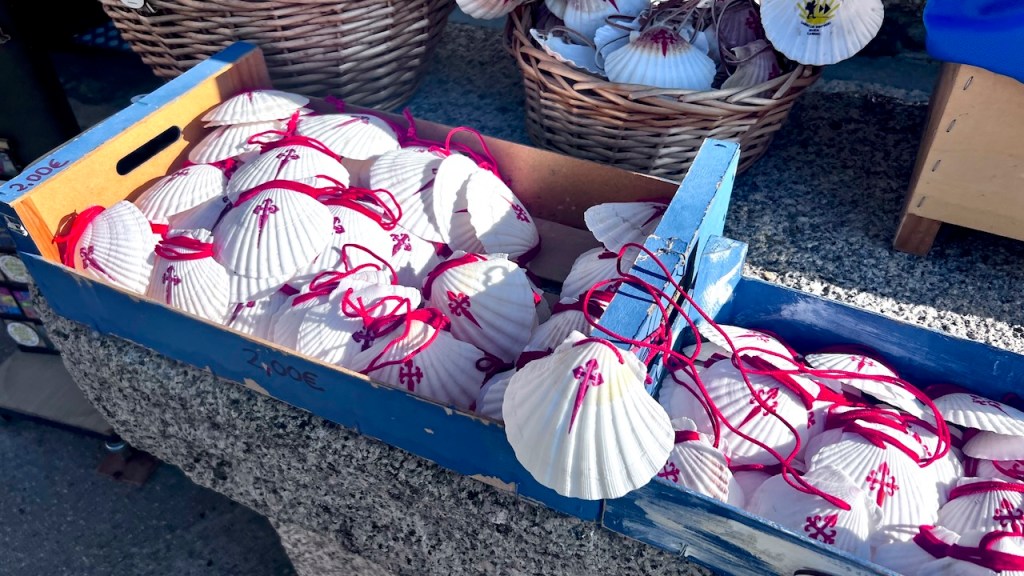
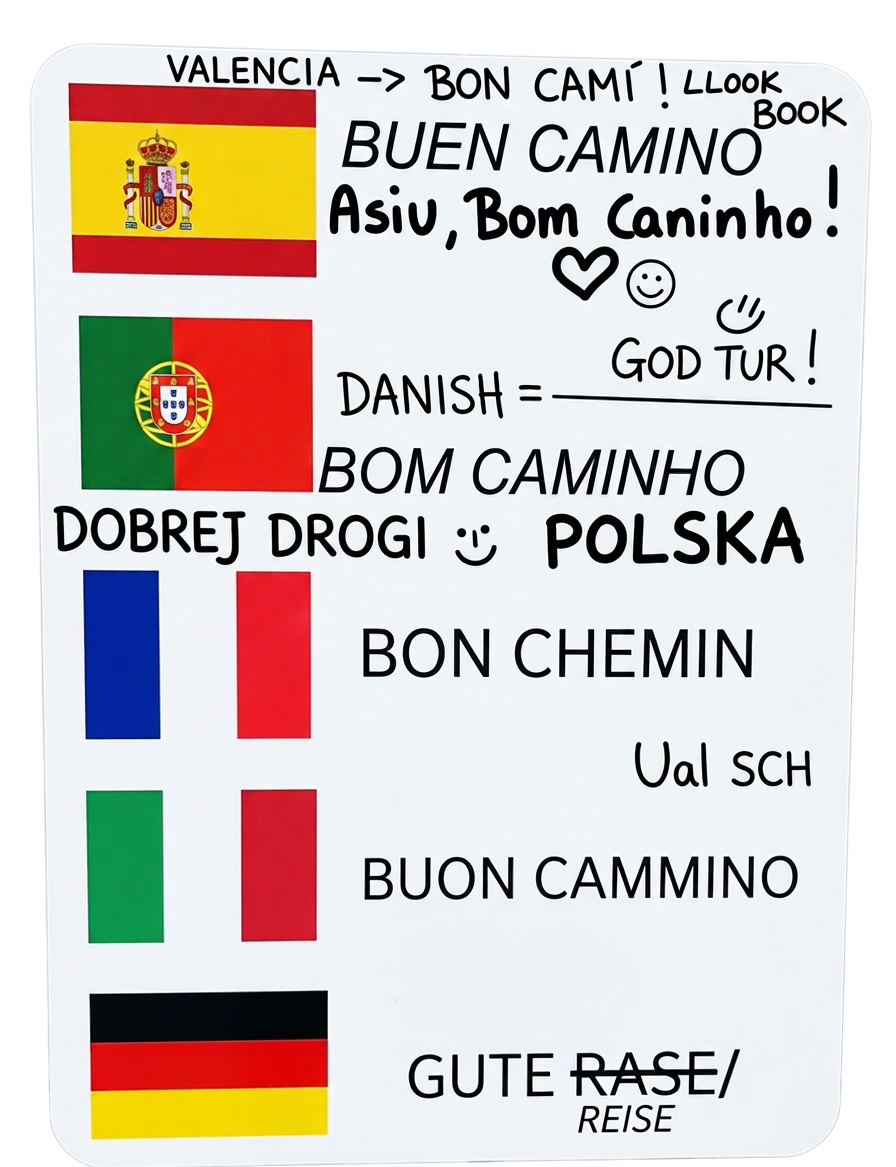
Buen Camino! (Good Way)
One of my favorite things is hearing “Buen Camino” or “Bom Caminho” from walkers and locals. (I still have the urge to say it to people I pass.) A simple greeting, “good journey” and you feel like part of something bigger. Pilgrims look out for each other, having a common purpose – getting to Santiago.
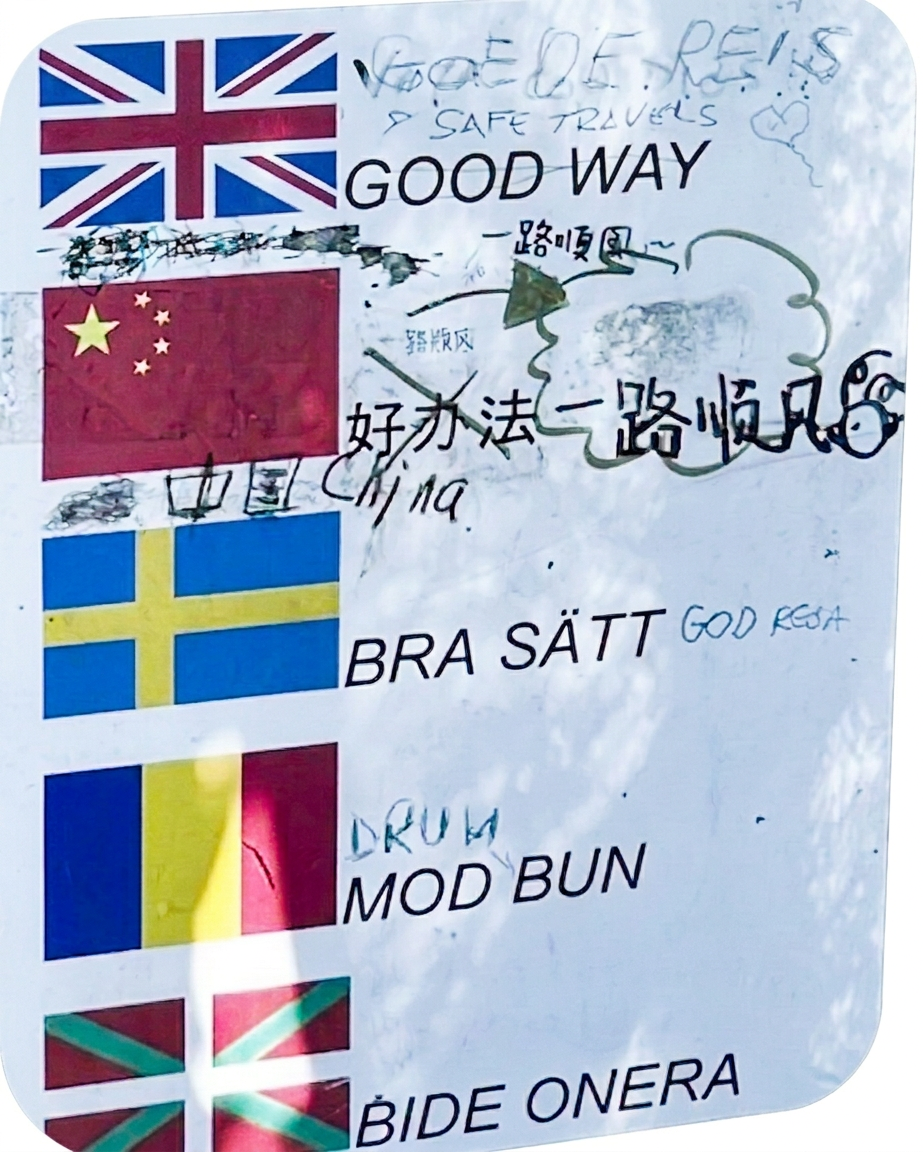
Carry Something With You and Then Let it Go.
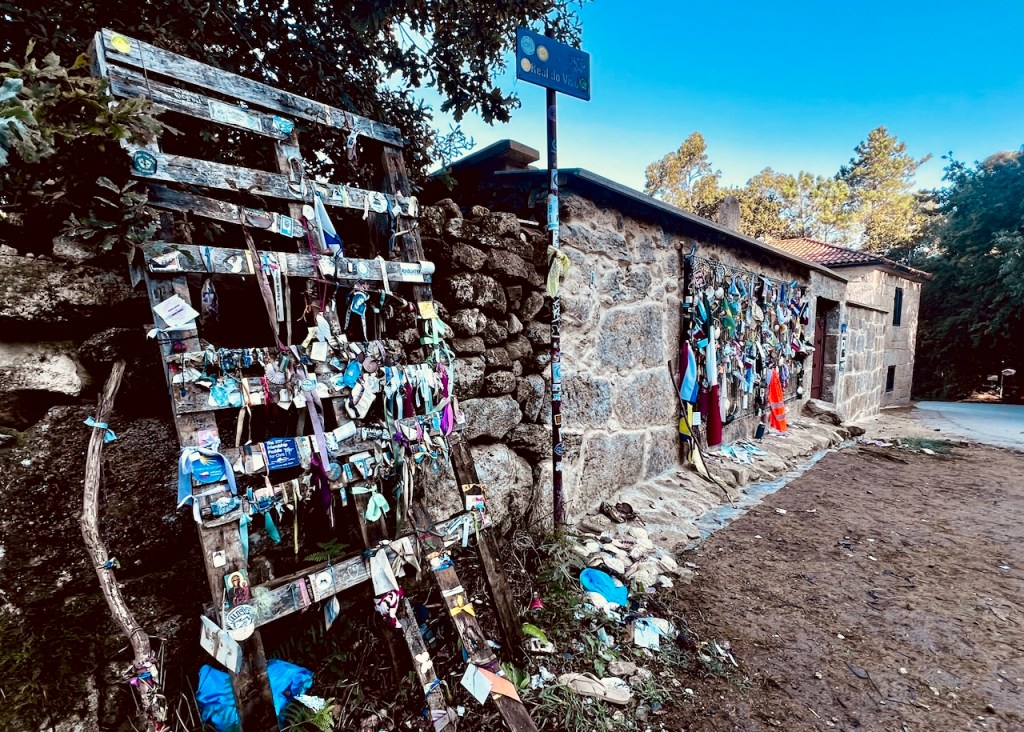
When did my Camino become more than just a walk? Seeing mementos left behind by pilgrims—a photo, old eyeglasses, handwritten messages, ribbons, each carried a story. For some, it’s a way of remembering; for others, letting go of burdens carried for too long.
The Camino is more than miles walked and places passed through. It becomes personal in unexpected ways.
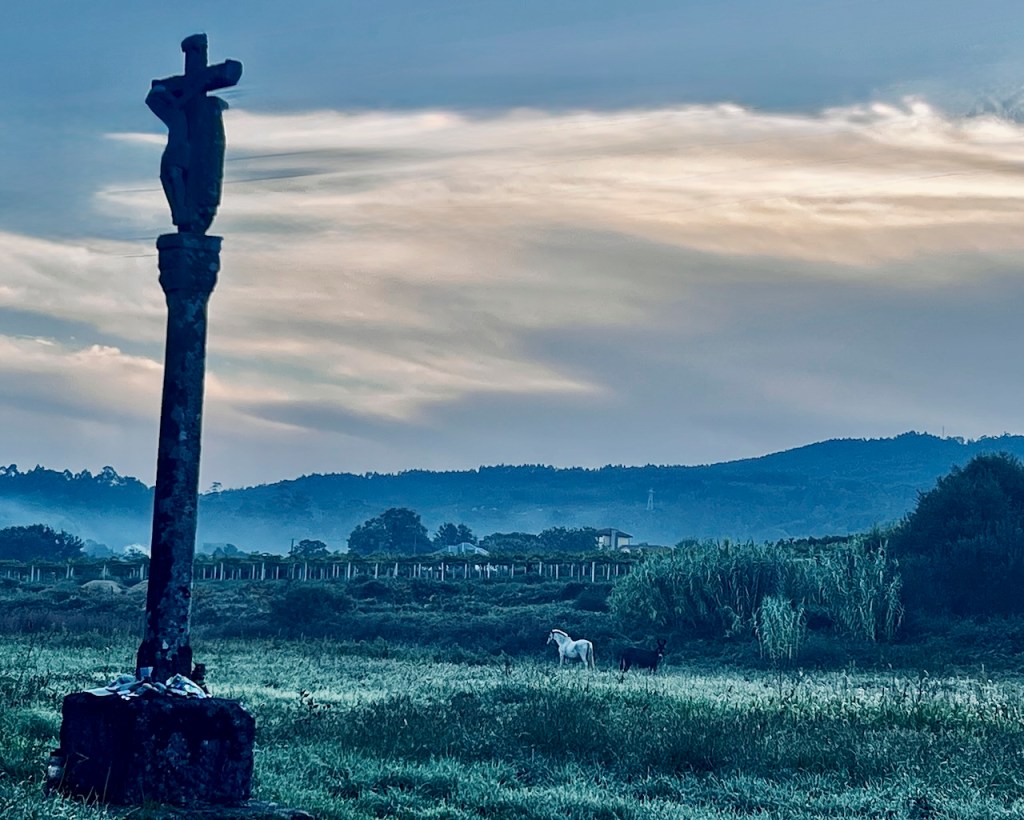
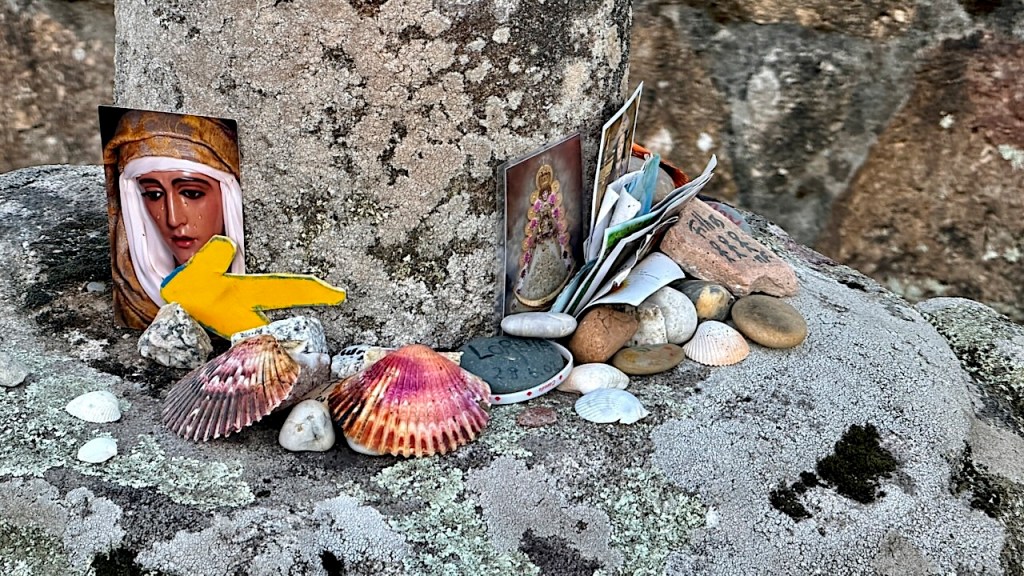
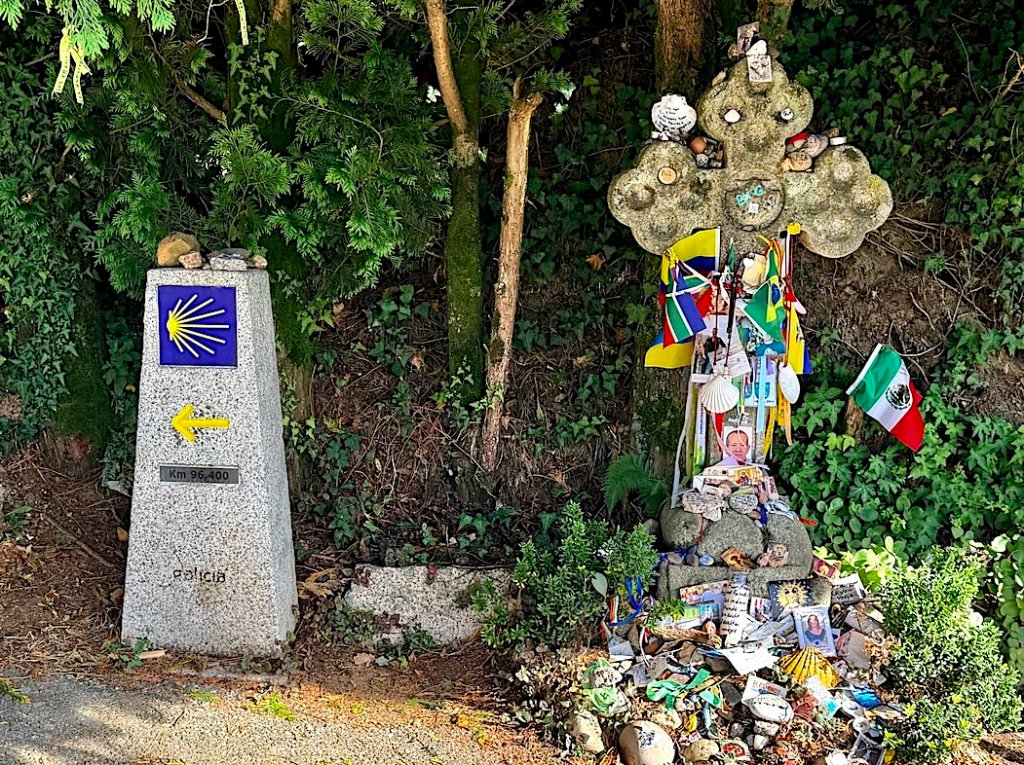
Cruceiros – Crosses
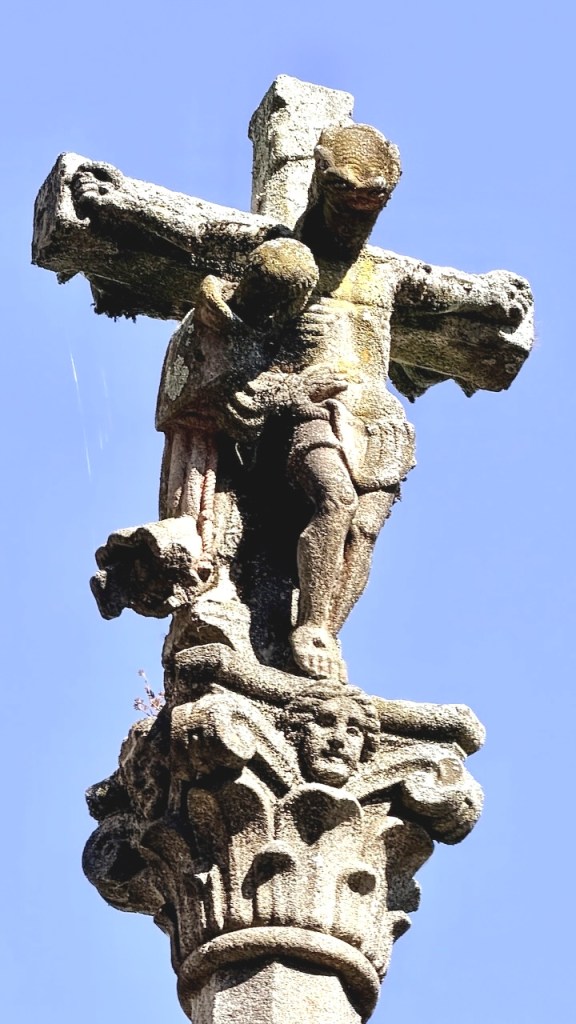
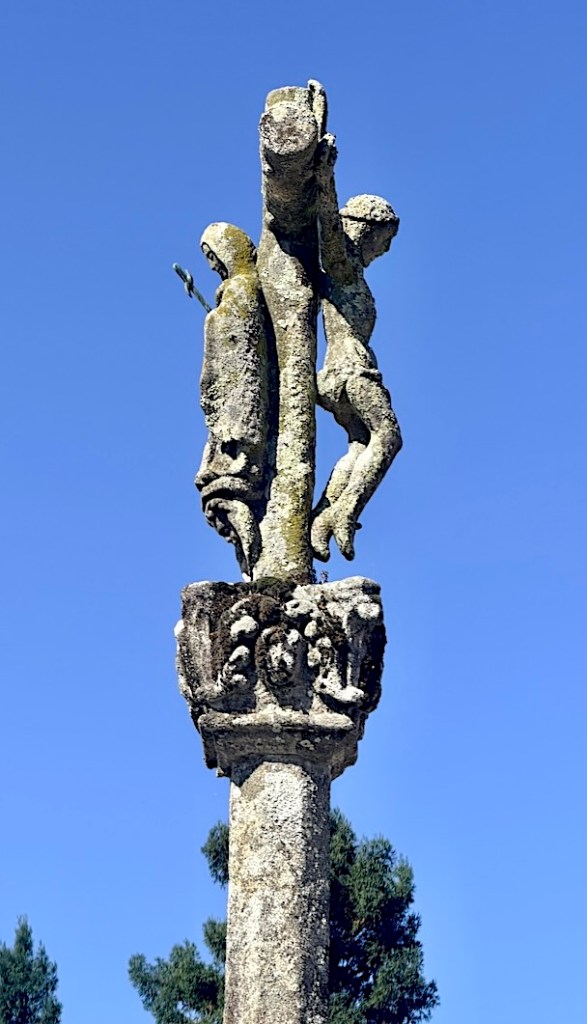
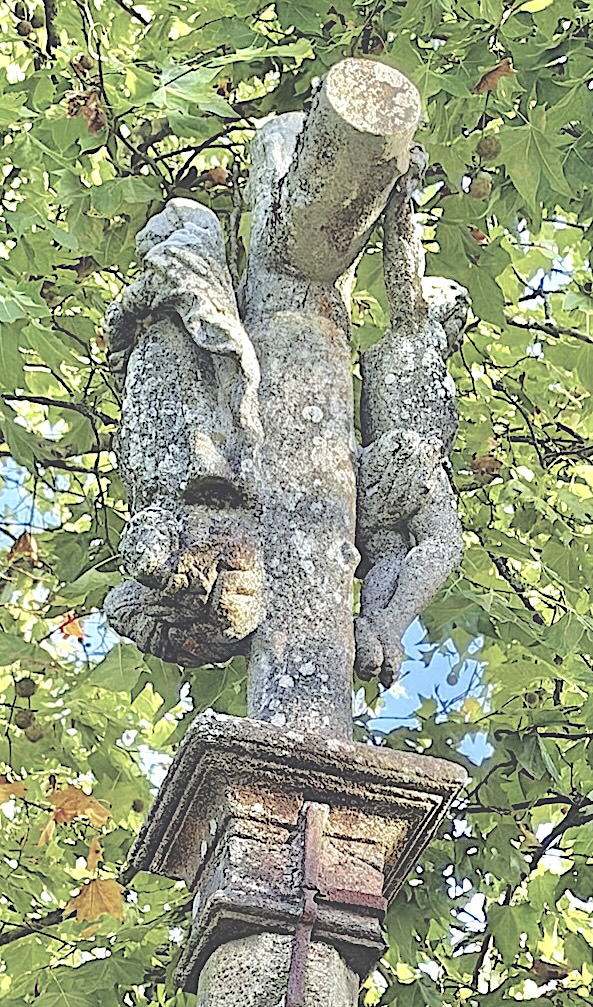
Large stone crosses (cruceiros) guide travelers, mark holy ground, and honor lost lives. Many are carved with Mary facing the sea and Christ facing the earth. The oldest date back to the 14th century, the majority from the 16th and 18th centuries, and some are modern.
Collecting Stamps
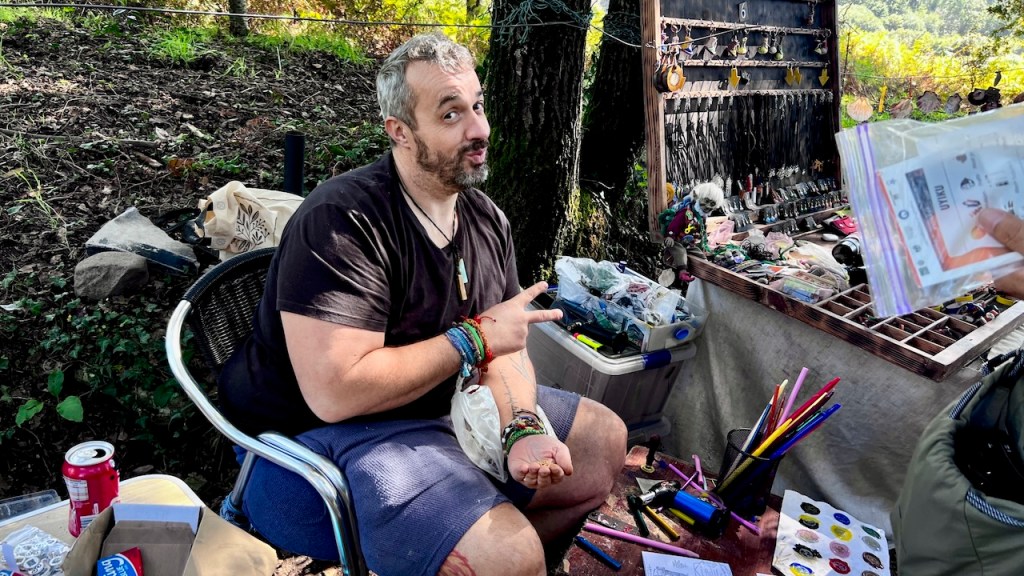
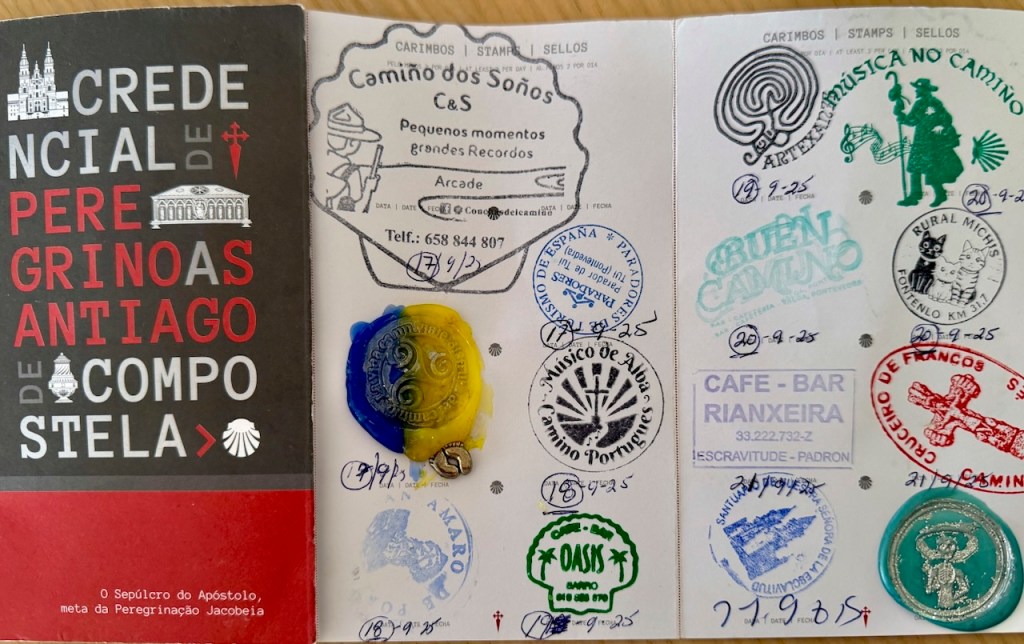
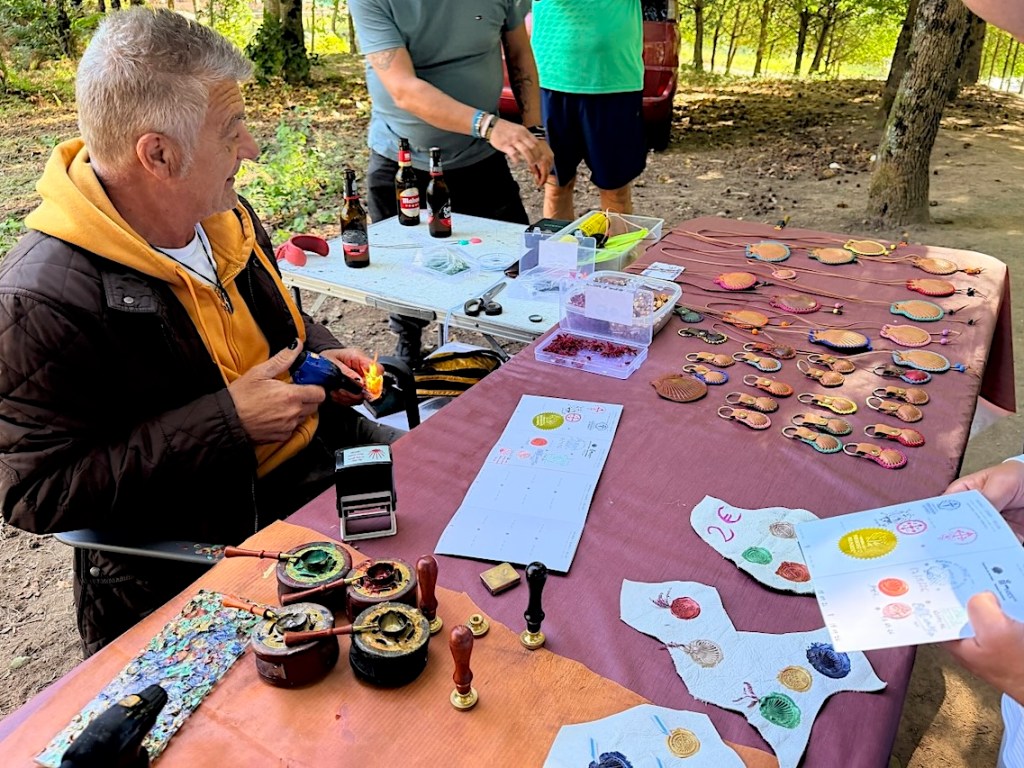
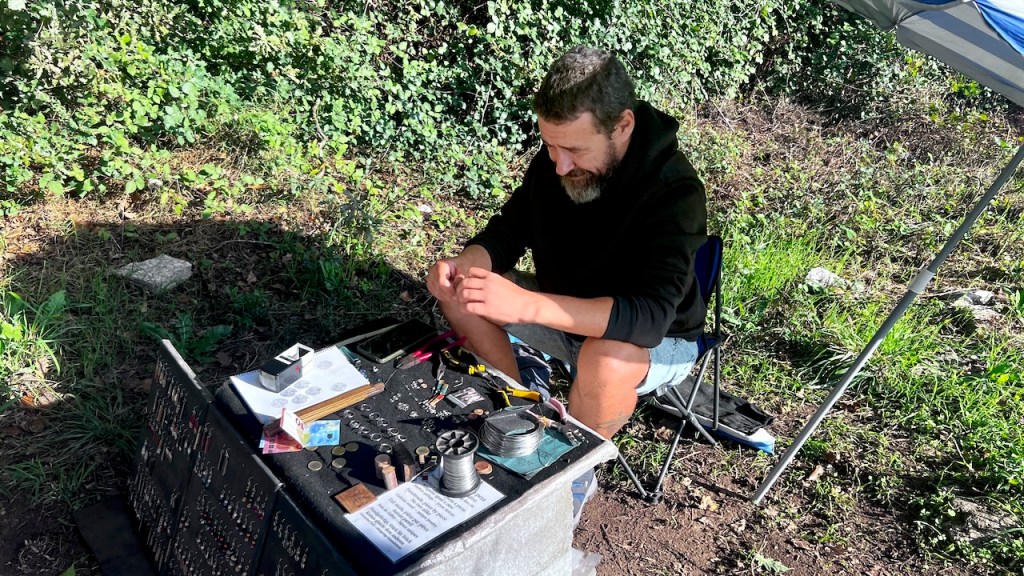
During the last 100 kilometers to Santiago, it is necessary to collect two stamps each day. Stamps (selos) came from café vendors, artists, and musicians. Each holds a memory.
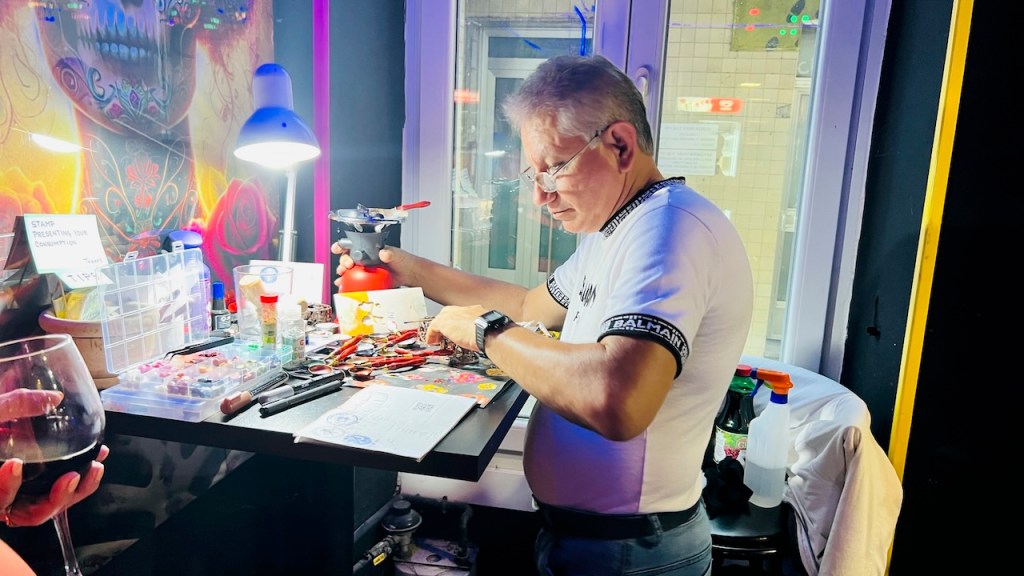
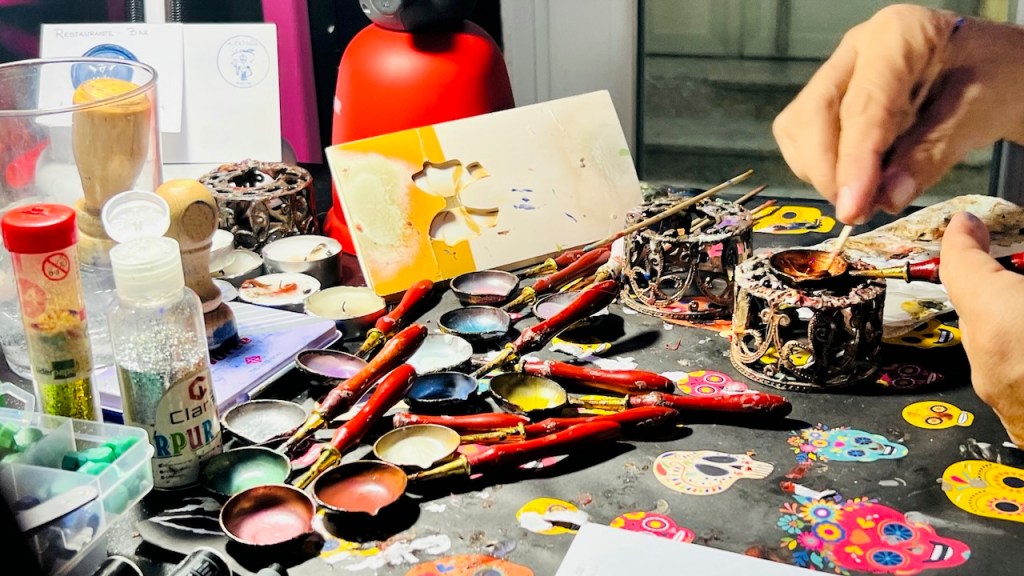
A Compostela – An Official “I walked” Document
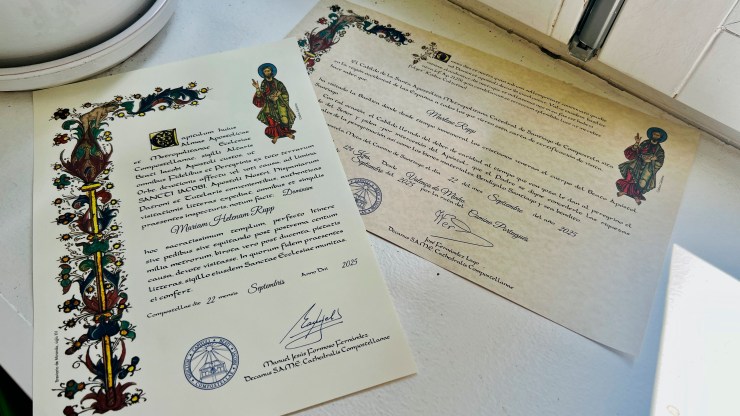
A Compostela is the official document (written in Latin) that recognizes the completion of the pilgrimage to the tomb of the Apostle Saint James. A second document (in Spanish) certifies the distance walked.
The end point is 0 km in Praza do Obradoiro, outside the Cathedral.
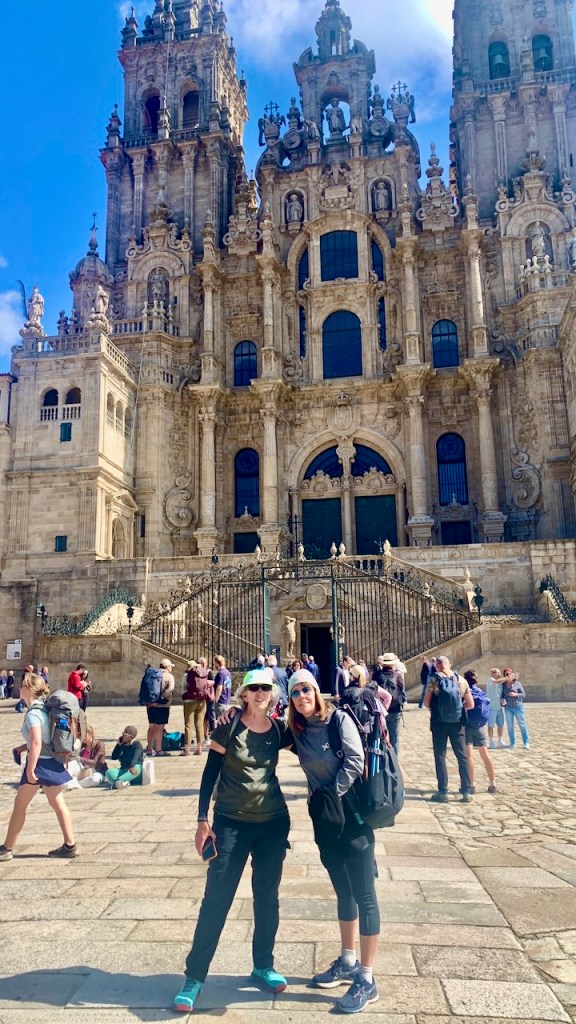
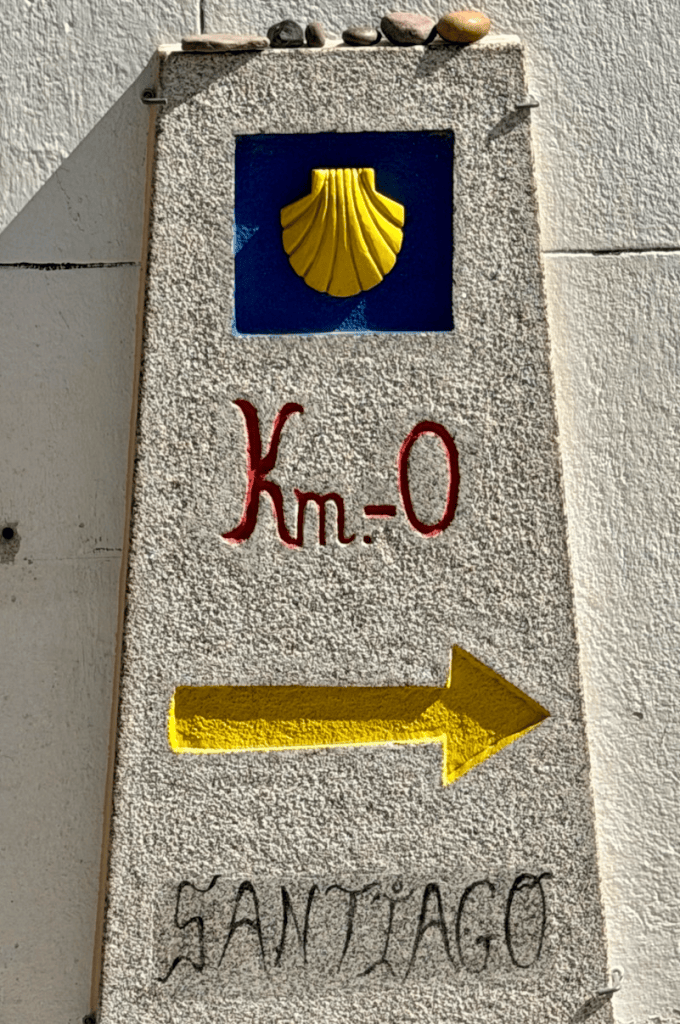
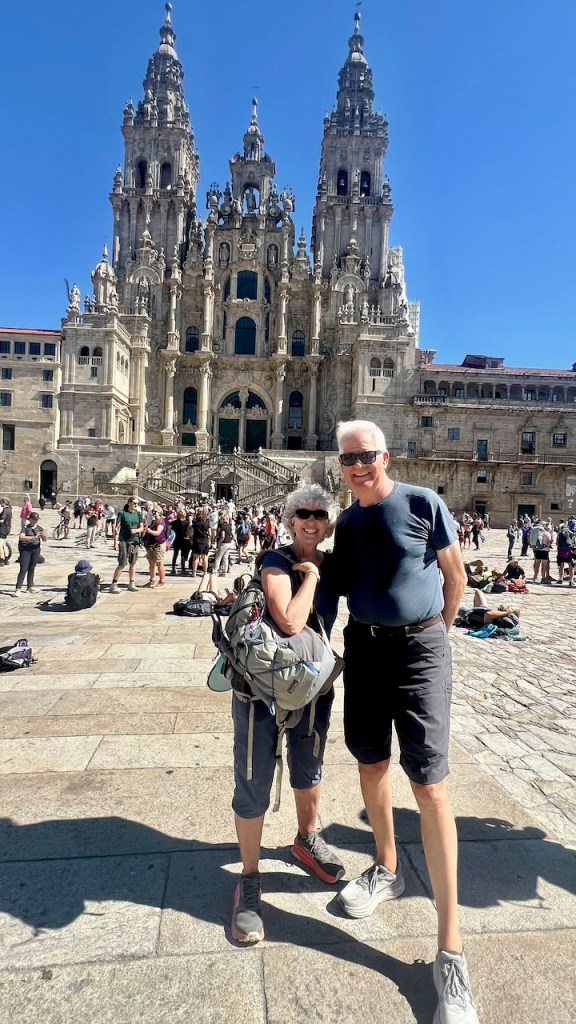
Upon presenting credencials at the Pilgrim Office, our group received our Compostelas. By day’s end, a total of 3,779 fellow pilgrims had arrived.
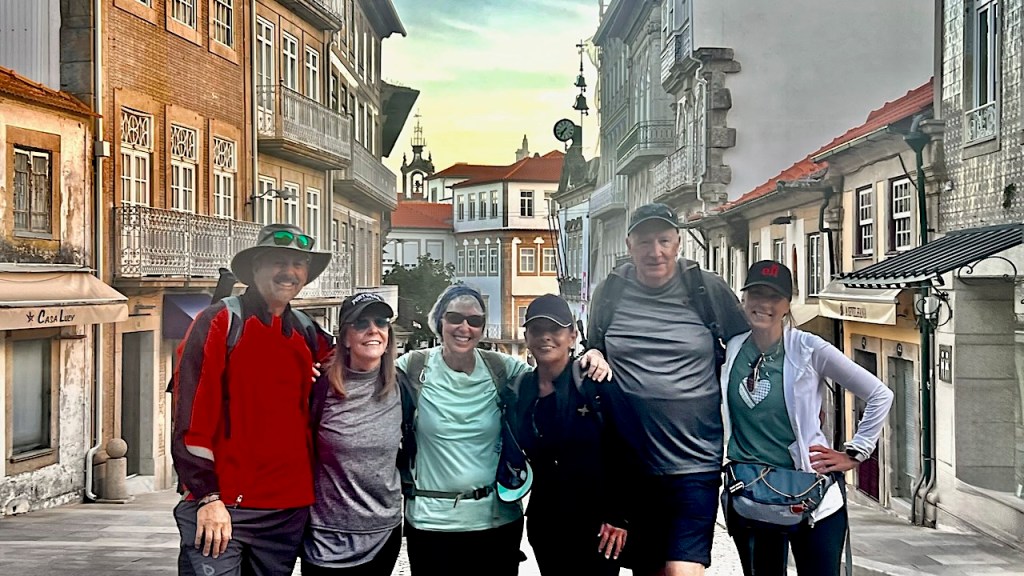
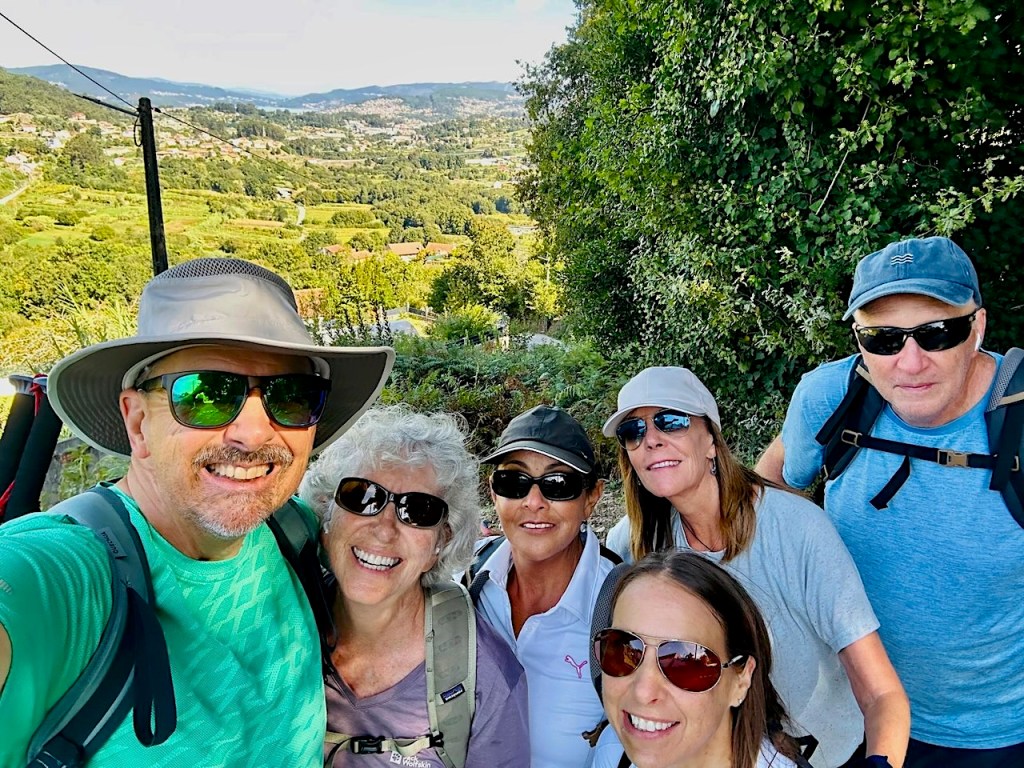
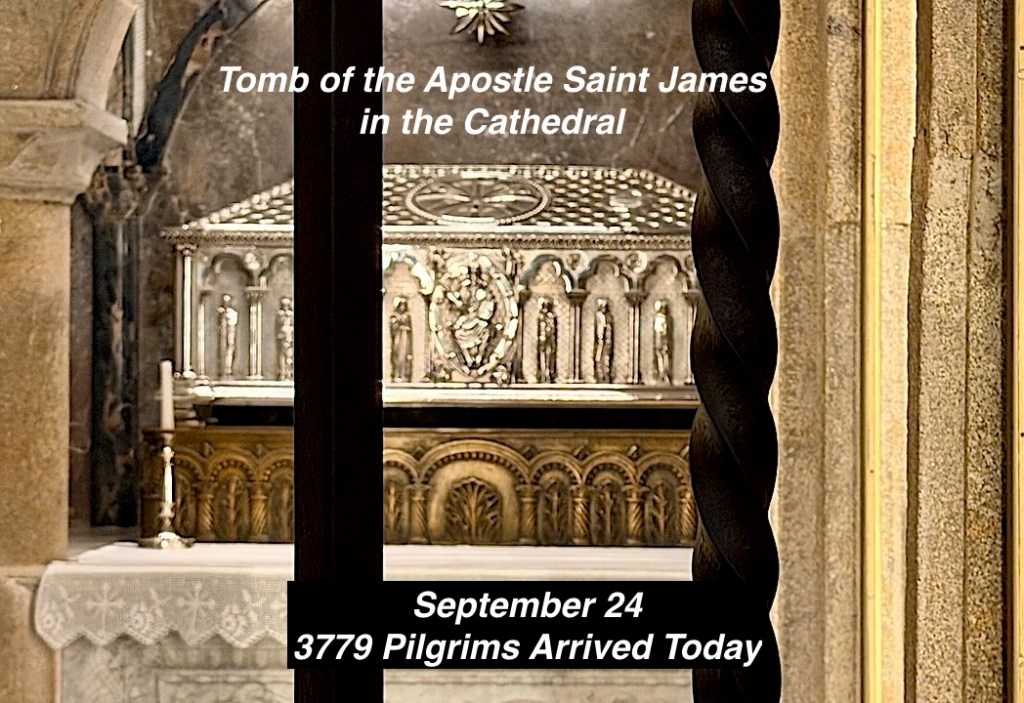
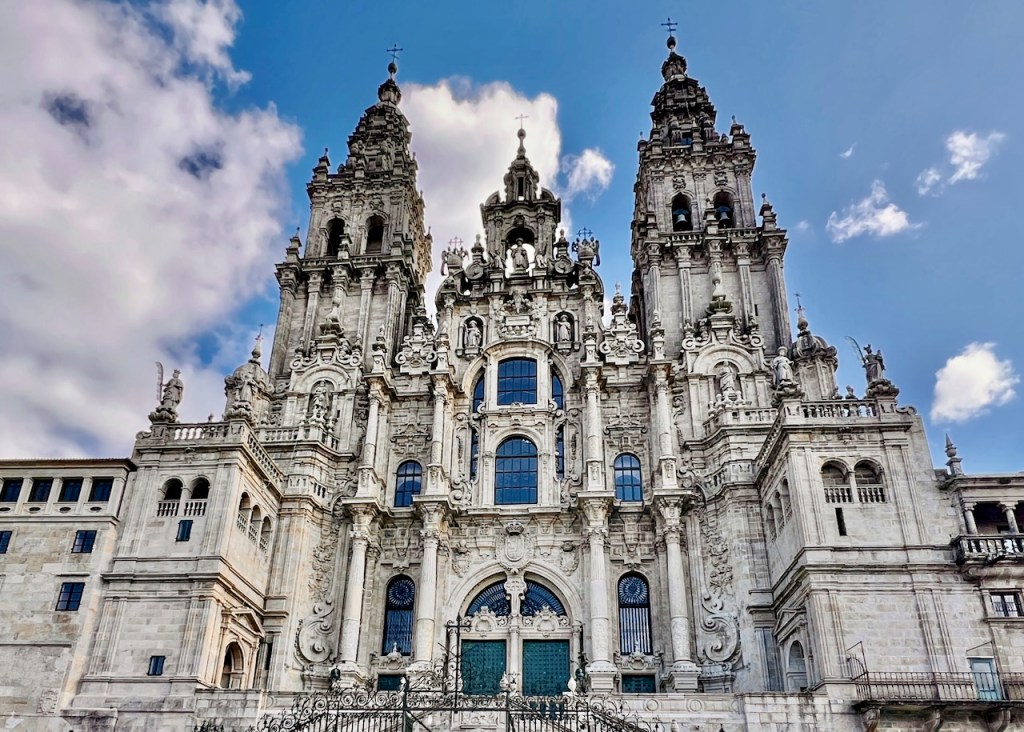
Finally, the Cathedral of Saint James
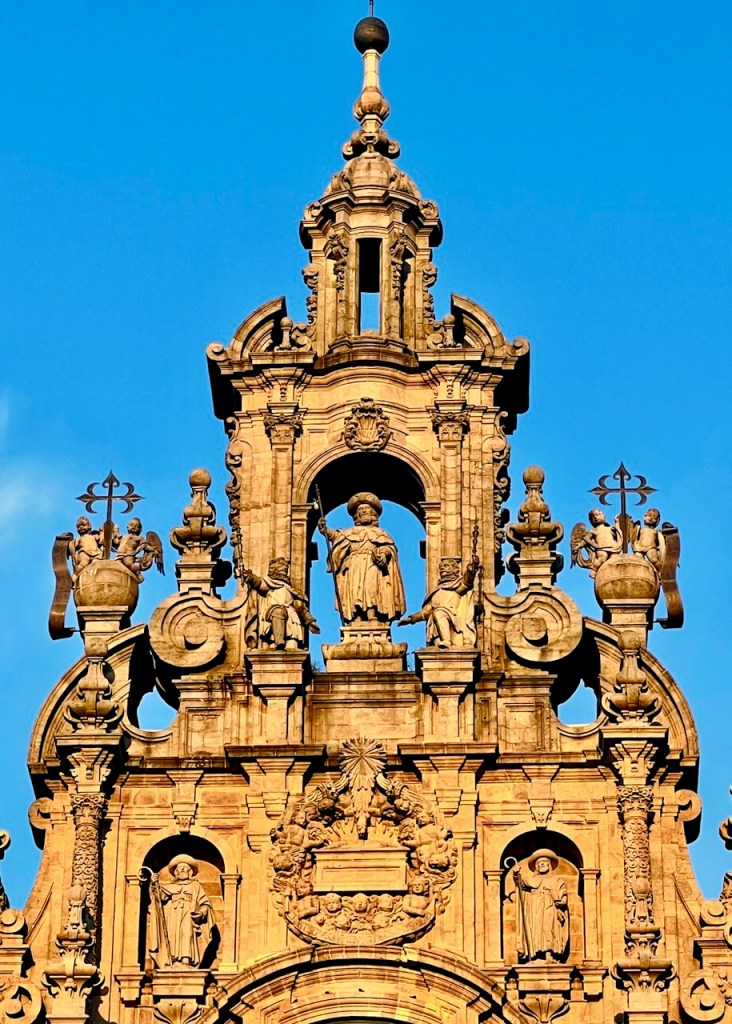
The Cathedral was consecrated in 1211 with additions built between 1739 and 1750.
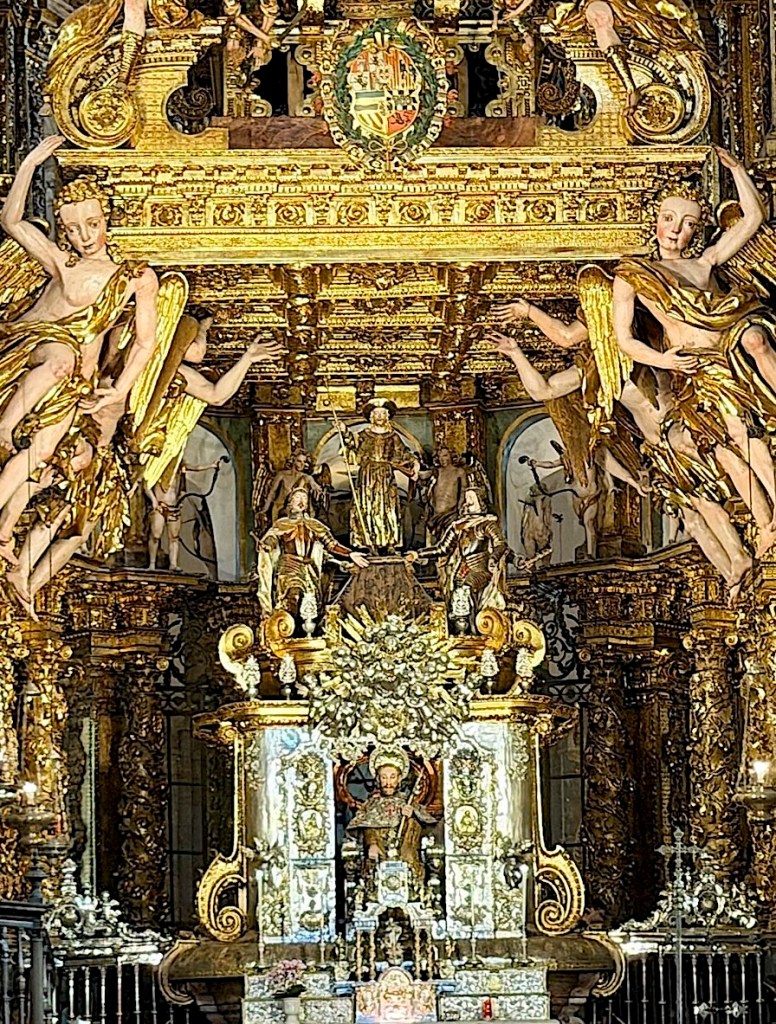
Pilgrims queue to go behind the altar to embrace the statue of Saint James. After miles of walking, the hug is an offer of gratitude for a safe and successful trip. (See hands hugging Saint James below.)
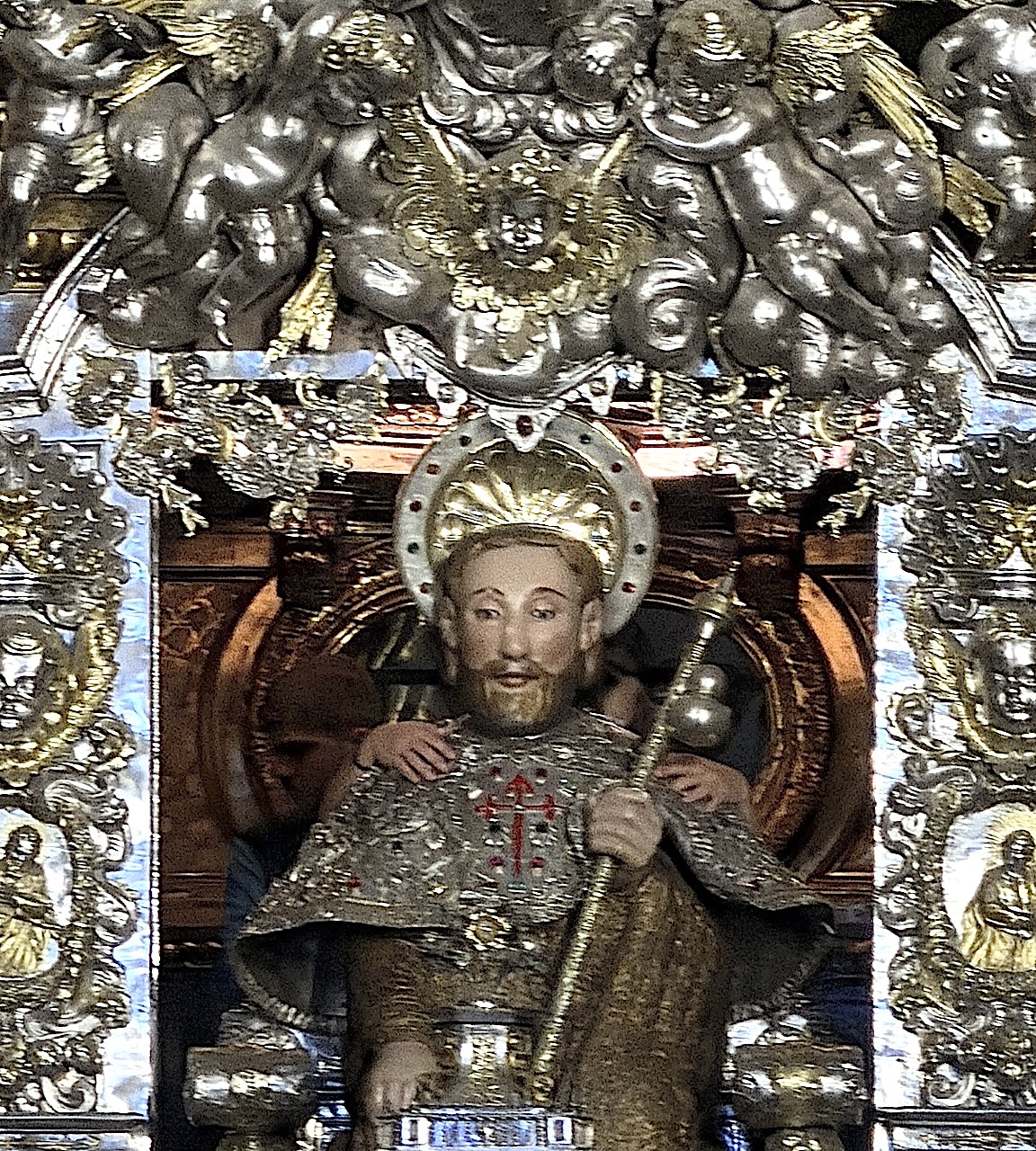
And then, at the Pilgrim Mass the next day . . . this happened:
The giant Botafumeiro (incense burner) hangs from the central dome of the Cathedral by a system of pulleys. Eight men are needed to hoist it. It does not swing at every Pilgrim’s mass, but it did at ours in 2025. (View video in FULLSCREEN).
It is over 5 feet tall, 220 pounds when packed with incense. When swinging, the arc reaches heights of 68 feet (20m) at about 42 mph. (68 km/h).
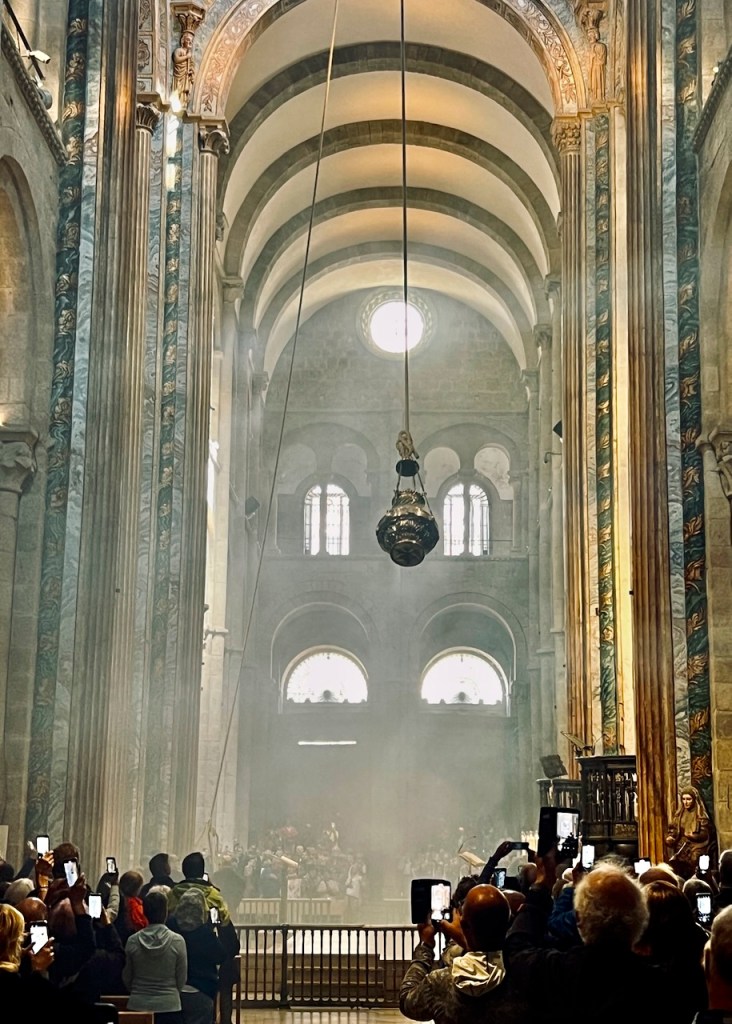
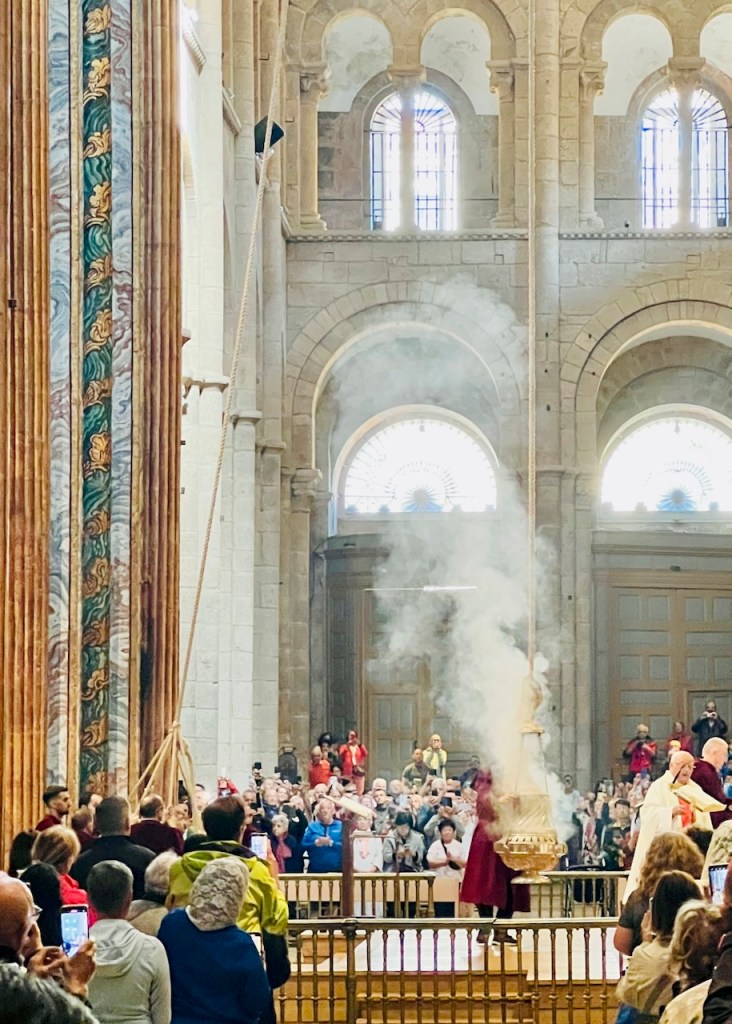
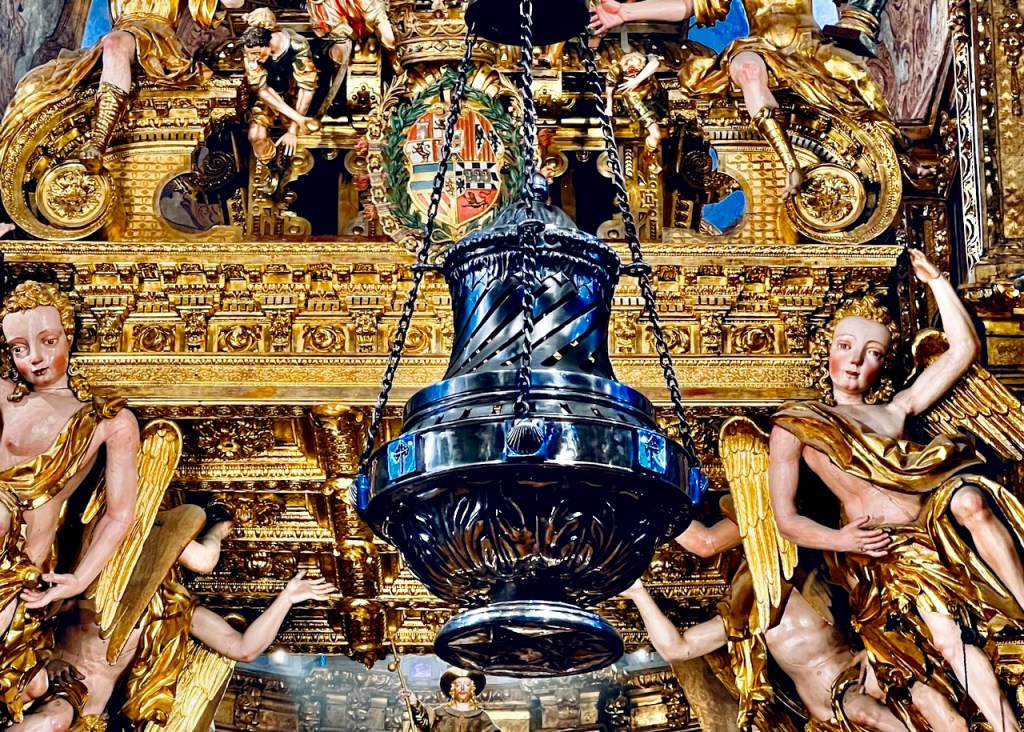
Has the Botafumeiro ever fallen? “July 25, 1499: During a visit by Infanta Catalina of Aragon, the rope snapped and the massive censer flew completely out of the cathedral through the Platerías door.” Per Google AI
Planning Your Own Camino…
Camino means “path” or “way”. The Camino de Santiago started in the 9th century and became an important medieval pilgrimage route by the 11th–12th centuries.
There are over 280 Camino de Santiago routes across 29 European countries. Most, but not all, lead to Santiago de Compostela, the traditional destination at the tomb of Saint James.
- Camino Tellers Website/Home – a guide with resources and a blog.
- CaminoWays.com – Plan your camino.
Popular Long Routes
- Camino Francés: 800 km from Saint-Jean-Pied-de-Port, France.
- Camino Portugués (from Porto): aprox 300 km.
To Be Continued:
- Things we saw
- Sights and Surprises Along The Way
- Combarro – A Most Delightful Village
- Walking in Northwestern Spain (Galicia)
CLICK HERE for my blog archive and photo gallery
Discover more from Travel Broadly - Marlene & Steve
Subscribe to get the latest posts sent to your email.

